 By Madsen Lake
Back pain is one of the most common physical ailments experienced by adults today. Prolonged sitting, poor posture at computer desks, lack of core strength, and everyday stress combine to place immense mechanical strain on the spinal column and surrounding musculature. This discomfort often presents as a dull, constant ache in the lower back or sharp tightness across the shoulders. While severe, chronic conditions require medical evaluation, many instances of everyday back tightness respond exceptionally well to targeted movement.
Yoga offers a non-invasive, therapeutic approach to managing and alleviating spinal discomfort. By combining structural alignment, gentle stretching, and conscious breathwork, a focused yoga practice can decompress the vertebrae, lengthen tight hamstrings, and relax overactive back muscles. This guide introduces a series of safe, beginner-friendly yoga postures designed to relieve tension and restore mobility to the spine.
The Anatomy of Everyday Back Pain
To address back pain effectively, it helps to understand why the spine becomes vulnerable to stiffness. The spinal column relies on a complex network of muscles, tendons, ligaments, and intervertebral discs to provide both structural stability and multi-directional mobility.
When you sit for extended periods, your hip flexors shorten and tighten. This tightness pulls the pelvis forward in an anterior tilt, which puts direct, unnatural pressure on the lumbar spine. Simultaneously, your core abdominal muscles and gluteal muscles often disengage, forcing the lower back muscles to work overtime to keep your body upright. This mechanical overload leads to muscle fatigue, spasms, and localized inflammation. Yoga helps break this cycle by stretching shortened muscles, mobilizing locked joints, and encouraging blood flow to ischemic, oxygen-deprived tissues.
Foundation Guidelines for Safe Practice
Before engaging in physical postures, it is crucial to establish safe movement habits to prevent further irritation to vulnerable spinal structures:
-
Move with the Breath: Never hold your breath during a stretch. Inhale to find length in your spine, and exhale as you settle into a fold or a twist. Deep diaphragmatic breathing relaxes the central nervous system, which naturally signals tight muscles to release.
-
Avoid Sharp Pain: There is a distinct difference between the warm sensation of a deep muscle stretch and a sharp, shooting, or electrical pain. If you experience the latter, carefully exit the posture immediately.
-
Maintain Slight Knee Flexion: When performing forward bends, always keep a slight bend in your knees. Locking out your legs transfers the entirety of the stretch into the lower back ligaments rather than the hamstrings, which can worsen lower back strain.
Gentle Postures for Lumbar and Thoracic Decompression
The following poses can be performed on a standard exercise mat. For maximum benefit, hold each position for five to ten slow, deep breaths.
Cat-Cow Pose (Marjaryasana-Bitilasana)
This classic pairing provides gentle mobilization for the entire spinal column, moving it through flexion and extension to promote the circulation of synovial fluid between the vertebrae.
-
Begin on your hands and knees in a tabletop position, aligning your wrists directly under your shoulders and your knees under your hips.
-
As you inhale, drop your belly toward the mat, lift your chest and tailbone toward the ceiling, and gaze gently forward.
-
As you exhale, press firmly through your palms, round your spine toward the ceiling, tuck your tailbone, and draw your chin toward your chest.
-
Continue alternating between these two movements, matching the rhythm of your breath.
Child’s Pose (Balasana)
Child’s pose is a restorative position that gently elongates the lower back muscles while opening the hips and calming the mind.
-
From a tabletop position, bring your big toes together to touch and widen your knees toward the edges of your mat.
-
Sink your hips back toward your heels and extend your arms straight out in front of you.
-
Lower your torso between your thighs and rest your forehead gently on the floor.
-
Breathe deeply into your back ribs, feeling your lower back expand with each inhalation.
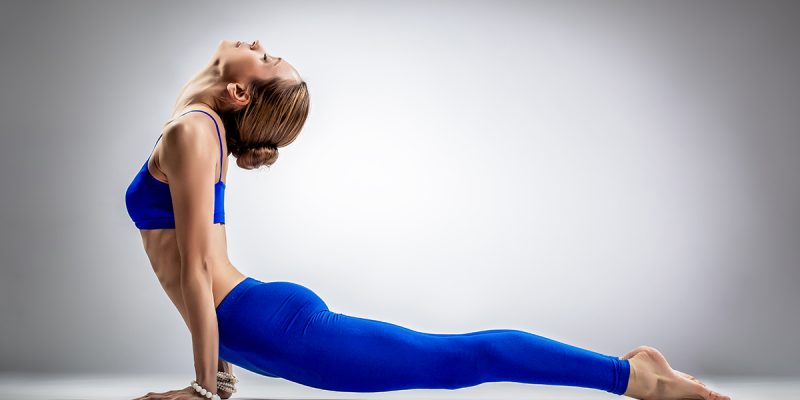
Sphinx Pose (Salamba Bhujangasana)
Sphinx pose is an excellent passive backbend that helps counteract the forward-slouching posture common in desk workers. It helps restore the natural inward curve of the lower back.
-
Lie flat on your stomach with your legs extended straight behind you, tops of the feet pressing into the mat.
-
Place your elbows directly under your shoulders, forearms resting flat on the floor parallel to each other.
-
Inhale and press your forearms into the mat to lift your chest and head away from the ground.
-
Keep your neck long and pull your shoulders down and away from your ears, engaging your upper back gently without straining the lower spine.
Supine Spinal Twist (Supta Matsyendrasana)
Twisting postures help rotate the vertebrae, neutralizing the spine and releasing tension in the outer hips and obliques.
-
Lie flat on your back, hug both knees into your chest, and then extend your arms out to the sides in a ‘T’ shape.
-
Slowly lower both knees over to the right side of your body, trying to keep your left shoulder flat on the floor.
-
Gaze over your left shoulder if it feels comfortable for your neck.
-
Hold for several breath cycles, then use your core to bring your knees back to the center and repeat on the opposite side.
Downward-Facing Dog (Adho Mukha Svanasana)
While often viewed as an upper-body strengthener, this pose provides profound traction and decompression for the spine when executed correctly.
-
From a tabletop position, walk your hands a few inches forward, tuck your toes, and lift your hips toward the ceiling to form an inverted ‘V’ shape.
-
Keep your knees generously bent to prioritize a straight, long line from your wrists up to your hips.
-
Press firmly through your index fingers and thumbs to push your weight back away from your shoulders, allowing your head to hang heavy between your arms.
Frequently Asked Questions
Is it safe to practice yoga if I have a diagnosed herniated disc?
If you have a herniated or bulging disc, you must approach yoga with extreme caution and professional medical guidance. Forward bending postures can increase intradiscal pressure and push the disc further outward, potentially compressing nerve roots. Modified gentle backbends or extension-based poses are often preferred, but you should consult your orthopedist or physical therapist before attempting any routine.
Can stretching my hamstrings really fix my lower back pain?
Yes, there is a strong mechanical connection between tight hamstrings and lower back discomfort. Because the hamstring muscles attach to the ischial tuberosity of the pelvis, shortened hamstrings pull the pelvis downward into a posterior tilt. This flattens the natural lumbar curve and forces the lower back muscles to stretch uncomfortably under load, leading to chronic ache.
How soon after waking up should I perform these back stretches?
It is generally safest to wait at least thirty to sixty minutes after waking up before performing deep spinal stretches. Overnight, the intervertebral discs absorb fluid and become naturally hydrostatic and swollen. This makes the spine temporarily stiffer and more susceptible to strain during early morning forward bending.
Should I apply heat or ice to my back before starting a yoga session?
If your back pain is due to chronic muscle stiffness, applying a warm compress for ten minutes before yoga can help increase blood flow and muscle elasticity, making your stretches safer. However, if your back pain is the result of a sudden, acute injury accompanied by sharp inflammation, skip the yoga and use ice instead to reduce swelling.
Why does my back sometimes feel more sore the day after doing yoga?
Mild muscular soreness, similar to what you feel after a light workout, is normal if you are engaging underutilized structural muscles. However, if you experience localized, aching joint pain or radiating discomfort, it indicates that you likely overstretched or forced your body into an alignment it was not ready to support.
What modifications can I use if I cannot comfortably reach the floor?
Yoga blocks and thick blankets are invaluable tools for managing back pain. If your hamstrings are tight during forward folds or downward dog, placing your hands on yoga blocks elevates the floor, which instantly reduces the structural demands on your lower spine and allows you to maintain proper alignment.